Experience strategy
Mapping the traveller experience
Connect the gaps between screens, services and the real world.
01 / 05
The experience does not stop at the screen
A traveller moves between planning, booking, leaving home, airports and accommodation. Along the way, they use confirmation emails, notifications, kiosks, boarding passes, gate agents and hotel services.
Travel companies continuously improve individual products, yet the transition from one stage to another can still break down. Moving between a digital interface and a physical service is often where a gap becomes visible.
At Travelport Digital, I used journey mapping to make that broader experience visible. The aim was to help the organisation consider a complete journey rather than optimise isolated features.
02 / 05
Build a shared picture
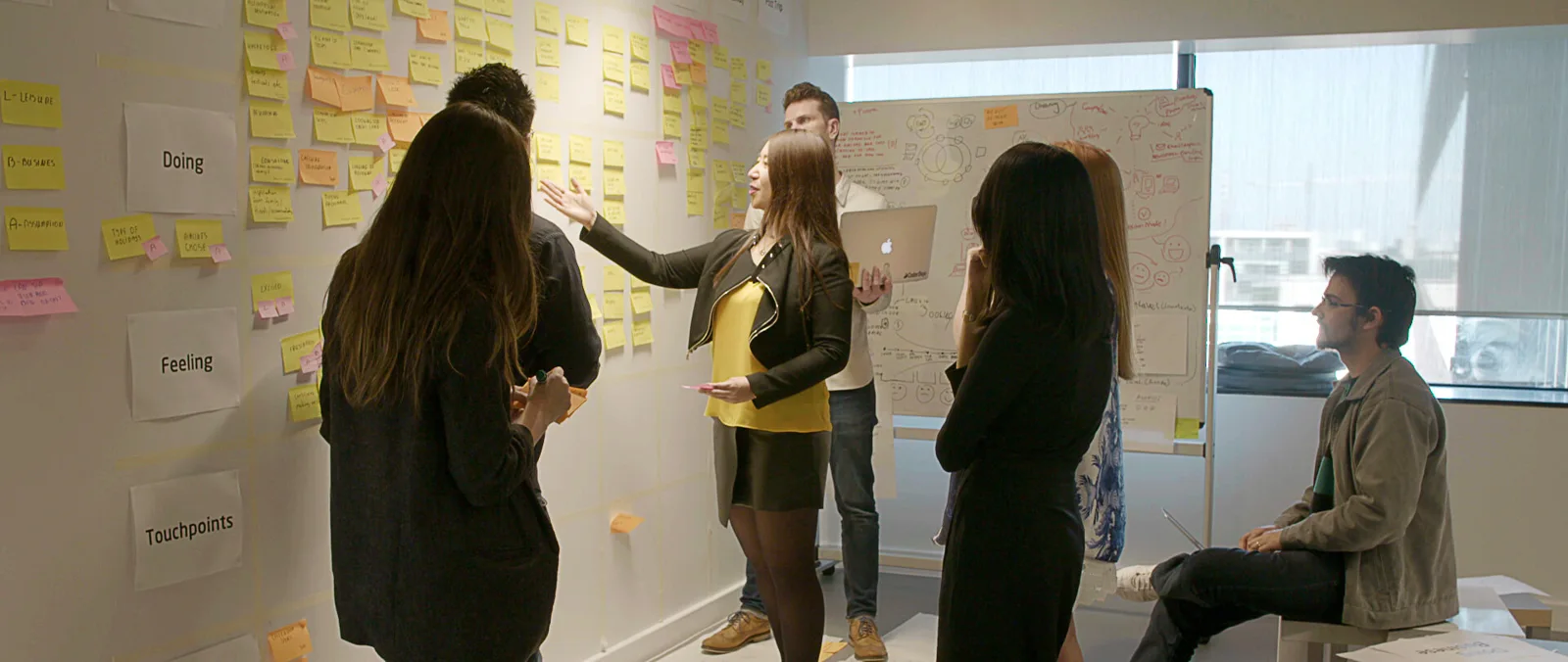
The map represented what the traveller was doing, thinking and feeling over time. It also captured the tools and touchpoints they used, why they used them and what they were trying to accomplish.
Combining those layers made the experiential highs and lows easier to discuss. The map became a shared reference for the people responsible for different parts of the service.
03 / 05
Look closely at the transitions
A journey map helps teams focus on traveller problems across multiple touchpoints. Without that view, a team can solve a problem within one product while creating another problem where that product meets the rest of the journey.
The key questions were about continuity: what happens when someone moves from one device to another, from an app to an airport service, or from one organisation’s product to another?
A shared picture can also guide investment toward the moments that matter most. The map does not replace research or establish impact on its own; it helps the organisation connect what it knows and decide where to look next.
04 / 05
Use the structure of a story
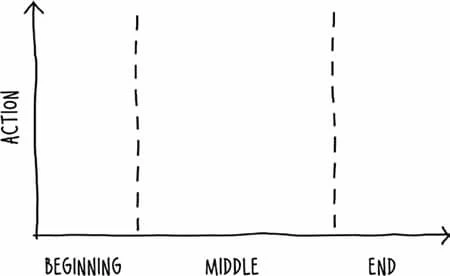
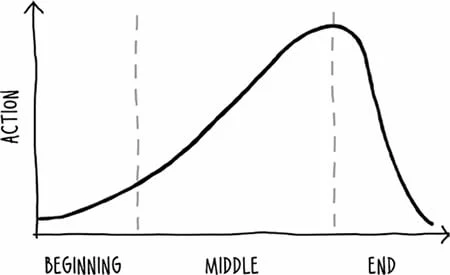
I framed journeys with a beginning, middle and end. The middle usually covers the longer sequence of activity, while the narrative arc shows how the experience develops over time.
That structure made it possible to move from a list of touchpoints to a story with context, transitions and consequences. It gave stakeholders a way to discuss the traveller’s experience beyond their own part of the product.
05 / 05
A tool for alignment
The outcome shown here is a strategic design artefact and a way of working: a shared picture of the traveller’s experience. It supports cross-functional conversations about gaps, priorities and opportunities without claiming a quantified business result.